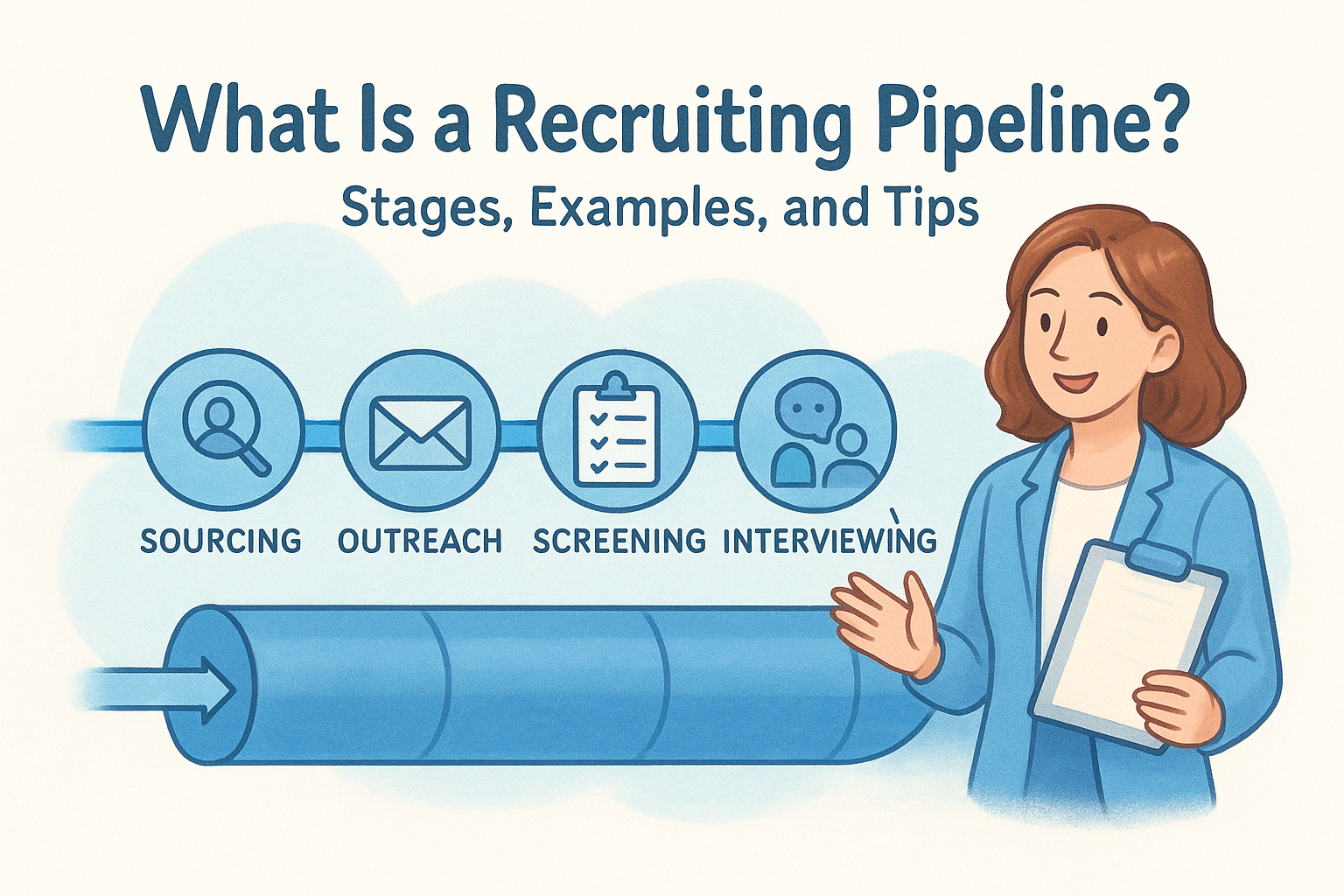
What Is a Recruiting Pipeline? Stages, Examples, and Tips
Most recruiters know the frustration: a role opens up, and the scramble begins from scratch. You're sourcing, screening, and scheduling all at once, racing against a hiring deadline that was tight from day one. That cycle repeats because there's no system feeding qualified candidates into your process before you actually need them. That system has a name, a recruiting pipeline, and understanding how it works is the difference between reactive hiring and consistently filling roles with the right people.
A recruiting pipeline is a structured framework that moves candidates through defined stages, from initial awareness all the way to offer acceptance. Each stage serves a specific purpose: attracting talent, evaluating fit, and keeping strong candidates engaged even when there's no immediate opening. When built well, it shortens your time-to-hire, reduces cost-per-hire, and gives your team a clear view of where every candidate stands. When neglected, it's just a spreadsheet collecting dust, and you're back to scrambling every time a requisition lands on your desk.
This guide breaks down what a recruiting pipeline actually looks like in practice, walks through each stage, and shares tips for building one that stays full. We built Olibr as a free recruiting platform with a searchable database of 180,000+ candidate profiles, AI-powered matching, and a full ATS, specifically so recruiters can stop starting from zero. Whether you're setting up your first pipeline or trying to fix a broken one, the stages, examples, and strategies below will give you a concrete framework to work from.
Why a recruiting pipeline matters
Understanding what is a recruiting pipeline starts with seeing what happens when you don't have one. Every time a role opens without existing candidates in the queue, you compress sourcing, screening, and interviewing into the same narrow window. That pressure pushes your team toward speed rather than quality, and the hire you end up with reflects that tradeoff. Building a pipeline before the need arrives is how you break out of that cycle entirely.
A pipeline built before you need it puts qualified candidates at the ready, so urgency stops driving your hiring decisions.
The real cost of hiring without a pipeline
Without a pipeline, every open role triggers a full restart. You post, wait, sift through unqualified applications, and rush to fill a seat that's been draining productivity every day it sits empty. Research consistently puts the average cost-per-hire above $4,000, and that figure doesn't account for the lost output from a vacant role or the hours your team spends on manual screening instead of strategic work. Those costs compound quickly across multiple open positions.
Reactive hiring also shrinks your candidate pool in a way that's easy to overlook. When you only reach out to people actively applying right now, you miss passive candidates who aren't submitting applications today but would respond to the right opportunity. That group tends to represent some of the strongest talent in any field, and you only reach them through relationships built before an urgent need forces your hand.
How a pipeline strengthens your hiring process
A structured pipeline gives your entire recruiting team a shared, real-time view of candidate status at every stage. Instead of digging through email chains or disconnected spreadsheets to figure out where someone stands, everyone sees the same information and knows exactly what comes next. That visibility prevents duplicate outreach and keeps strong candidates from going cold while your team figures out internal logistics.
Your hiring managers see faster results as well. When a requisition opens, pre-vetted candidates from earlier sourcing can move directly into screening rather than waiting for a fresh batch of applications to arrive. In competitive markets where strong candidates collect multiple offers within days of starting a search, that head start frequently determines whether you land your first-choice hire or settle for whoever hasn't accepted an offer yet.
Recruiting pipeline vs hiring funnel and ATS
Three terms get used interchangeably in recruiting conversations, but they describe different things with different purposes. Knowing how a recruiting pipeline, a hiring funnel, and an ATS each work separately helps you use all three together without creating confusion inside your team.

How a pipeline differs from a hiring funnel
A hiring funnel tracks candidate volume as it narrows from application to offer. You start with hundreds of applicants and watch the count shrink at each stage until one person accepts. It's a measurement tool, useful for spotting where candidates drop out and whether your conversion rates look healthy. What is a recruiting pipeline, by contrast, is a proactive system for building and managing candidate relationships before a role even opens. A pipeline feeds the top of your funnel; it doesn't describe the funnel itself.
Your pipeline is the supply system. Your funnel is the measurement system. Both need to work or neither delivers results.
How a pipeline relates to your ATS
An applicant tracking system is the software infrastructure that stores candidate records, tracks status changes, and keeps your team organized across open roles. Think of it as the operational layer where pipeline activity lives. Your pipeline is the strategic process you run inside that system, including how you source candidates, which stages you define, and how you keep warm candidates engaged between active searches. Without a clear pipeline strategy, an ATS becomes an expensive database of names that nobody revisits. Without an ATS, your pipeline has no reliable place to operate, and critical candidate information gets lost across inboxes and spreadsheets.
Recruiting pipeline stages with examples
Understanding what is a recruiting pipeline becomes concrete when you map out the stages. Most pipelines follow six to seven defined checkpoints, each with a specific goal and a clear handoff to the next. The table below shows those stages alongside what a real candidate experience looks like at each one.

| Stage | What happens | Example action |
|---|---|---|
| Sourcing | You identify and attract candidates | Boolean search, referrals, direct outreach |
| Outreach | You make first contact | Personalized message to a passive candidate |
| Screening | You evaluate basic fit | Resume review, phone screen |
| Interviewing | Hiring manager assesses depth | Structured behavioral interview |
| Assessment | Skills or culture fit testing | Take-home project, AI interview scoring |
| Offer | You extend and negotiate terms | Verbal offer followed by written package |
| Hire | Candidate accepts, onboarding begins | Background check, day-one prep |
Early stages: sourcing and screening
Sourcing and screening set the quality of every hire that follows. During sourcing, you're building a pool of potential candidates through job boards, referrals, and direct outreach to people who aren't actively looking. Screening then filters that pool by confirming basic qualifications and role fit before anyone commits time to a full interview cycle. Skipping a structured screening step is one of the fastest ways to waste interview capacity on candidates who were never a realistic match.
Later stages: interviews through offer
The offer stage is where slow internal processes lose strong candidates to faster-moving competitors.
Once a candidate clears screening, your interview and assessment stages validate the depth of their skills and how they work within a team. Moving quickly at this point matters more than most teams anticipate. Candidates in active searches typically hold multiple offers at the same time, and a drawn-out decision process is often enough to lose someone your team spent weeks evaluating.
How to build a recruiting pipeline step by step
Building a pipeline isn't a one-time project you complete and shelve. It's an ongoing practice that starts with a clear understanding of what is a recruiting pipeline in the context of your specific hiring goals. Before you source a single candidate, define the roles you hire for most frequently and map out what the ideal candidate profile looks like for each one. That clarity shapes every decision downstream.
Define your stages and assign ownership
Your pipeline needs defined stages with someone accountable at each checkpoint. Without clear ownership, candidates stall, feedback loops close slowly, and strong applicants move on. Start with the six to seven stages outlined earlier in this guide, assign a team member or hiring manager to each transition point, and document what "done" looks like before moving a candidate forward.
Vague stage definitions are one of the most common reasons pipelines stall and candidates go cold.
Source proactively, not just when roles open
Proactive sourcing separates teams that consistently hire well from teams that scramble. Build your candidate pool before a role opens by setting up Boolean searches, activating employee referral programs, and reaching out to passive candidates during quieter hiring periods. Platforms like Olibr give you access to a searchable database of 180,000+ candidate profiles with AI-powered matching, so you can identify strong fits and tag them for future roles without starting from scratch every time a requisition arrives.
Keep candidates warm between openings
Staying in touch with candidates you've already vetted costs less time than re-sourcing from zero. Send a brief quarterly check-in to strong candidates who weren't the right fit for a previous role. That simple habit keeps your pipeline full and your response time short when the next opening lands.
How to maintain and measure pipeline health
Building a pipeline answers what is a recruiting pipeline in theory, but keeping it healthy is where most teams consistently fall short. A pipeline that nobody audits becomes a list of outdated contacts that slows your response time rather than shortening it. Set a recurring calendar block at least once a month to review candidate status, remove contacts who have accepted roles elsewhere, and flag anyone worth re-engaging before your next opening arrives.
Track the metrics that signal pipeline problems
[Stage conversion rates](https://olibr.com/blog/applicant-tracking-system-for-staffing-agencies) tell you exactly where candidates drop out of your process. If you consistently lose candidates between screening and the first interview, that gap points to a scheduling or communication problem, not a sourcing failure. Track time-in-stage alongside conversion rates so you spot bottlenecks while there is still time to fix them, rather than after a strong candidate has already accepted a competing offer and moved on.
A pipeline metric you don't act on is just a number sitting in a report.
Review pipeline quality, not just volume
Volume looks reassuring until you filter your candidate pool against your actual open roles and find that most profiles no longer match. Regularly audit your database by filtering for skills, location, experience level, and availability against the positions you hire for most frequently. Concentrate your re-engagement outreach on the top tier of candidates you have already evaluated, since those conversations convert faster and require far less screening than reaching out cold to someone you tagged two years ago and never followed up with.

Where to go from here
Now that you understand what is a recruiting pipeline and how each stage connects, the next step is putting that structure into practice. Start small: define your most frequently hired roles, map the six to seven stages this guide outlines, and assign clear ownership at each checkpoint. That foundation alone will cut the time you spend scrambling when a new requisition arrives.
From there, focus on building your candidate pool before you need it. Proactive sourcing and regular pipeline audits separate teams that hire consistently well from those that restart from zero every time. The habits that keep your pipeline healthy, tracking stage conversions, re-engaging vetted candidates, and removing outdated contacts, are the same ones that shrink your time-to-hire over months, not just for a single role.
If you want a platform built to support every stage of this process without a monthly subscription fee, start hiring smarter with Olibr and put your pipeline to work today.
For hiring teams
Search 180,000+ candidate profiles — free.
Olibr is a community-funded recruiting platform: full ATS, AI interviews, and a shared resume database. No per-seat fees.