
9 Candidate Experience Best Practices to Win Top Talent
A recruiter's job doesn't end at finding qualified candidates, it extends to how those candidates feel throughout the entire hiring process. Poor communication, clunky application forms, and weeks of silence are enough to push top talent straight into a competitor's arms. That's exactly why candidate experience best practices matter: they directly impact whether your best applicants accept the offer or ghost you after the second round. According to research, nearly 60% of job seekers have abandoned a hiring process due to a negative experience.
The problem is that most recruiting teams know this but still struggle to fix it. Hiring volume grows, time gets squeezed, and candidate experience quietly drops to the bottom of the priority list. Tools like Olibr's free ATS and AI-powered screening help close that gap by automating the repetitive work, resume parsing, candidate matching, interview scheduling, so recruiters can spend more time on the human side of hiring that candidates actually remember.
This article breaks down nine practical strategies you can implement to improve every touchpoint of your recruitment process, from the first job posting to the final follow-up. Whether you're an in-house recruiter or running an agency, these aren't theoretical ideas, they're moves that lead to faster hires, stronger employer branding, and candidates who want to work with you, not just for you.
1. Run your hiring in one system with Olibr
When your hiring process lives across five different tools, candidates pay the price. Scattered data, delayed responses, and inconsistent communication are all symptoms of a fragmented recruiting stack. One of the most underrated candidate experience best practices is running your entire hiring operation from a single, centralized platform where every recruiter works from the same source of truth.
Where candidate experience breaks when tools sprawl
Using a separate ATS, email client, interview scheduler, and scoring spreadsheet creates handoff failures at every stage. A candidate who applied two weeks ago may still be waiting for a response because their profile got buried in a tab no one checks anymore. Disconnected tools also make it nearly impossible to give candidates a consistent point of contact or a timeline you can actually commit to.
Fragmented hiring stacks are one of the leading causes of poor candidate communication, and poor communication drives top talent away before the offer stage.
How Olibr keeps every touchpoint consistent
Olibr brings job posting, candidate search, AI matching, interview scheduling, and pipeline tracking into one free platform. Every recruiter on your team sees the same candidate status in real time, so no one slips through the cracks. The shared candidate database of 180,000+ profiles means your team spends less time hunting for applicants and more time actually engaging with them.
How to set up a simple, visible hiring pipeline
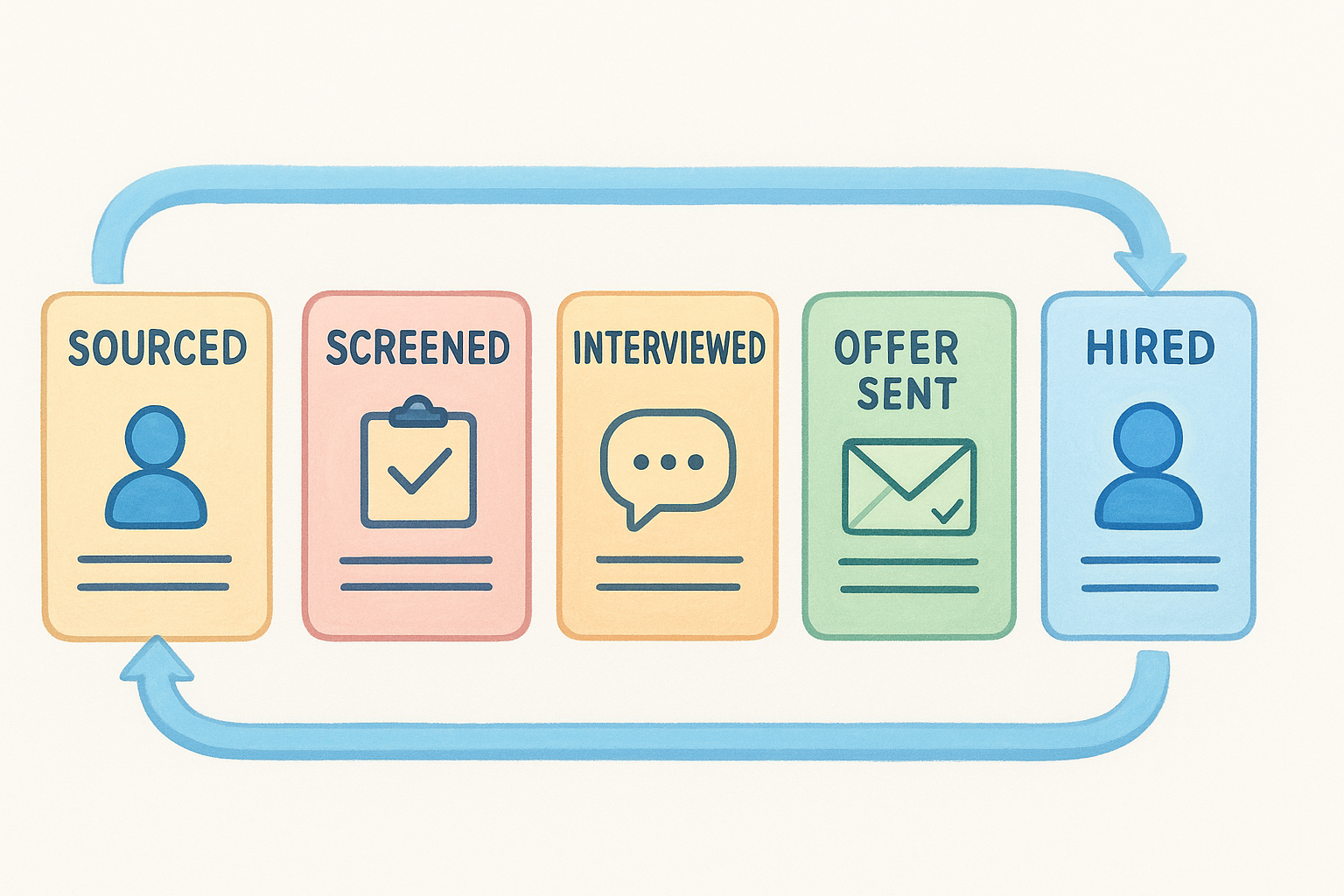
Start by mapping your actual hiring stages, not an idealized version of them. In Olibr's ATS, create pipeline columns that reflect what your team really does: sourced, screened, interviewed, offer sent, and hired. Keep the stages minimal so candidates move through them quickly without unnecessary delays. Assign ownership to each stage so every recruiter knows exactly what action they are responsible for and when.
How to use AI features without losing the human touch
Olibr's AI-powered candidate matching and interview tools handle the repetitive screening work so your team can focus on real conversations. Let the AI score resumes and flag top matches, but make sure a human reviews those recommendations before you reach out. Automated scoring should inform your decision, not replace your judgment. When candidates feel like they are talking to a real person rather than a system, they stay engaged far longer.
2. Write job posts that set expectations early
A job post is often a candidate's first impression of your company. Writing one that sets clear expectations upfront is one of the most effective candidate experience best practices you can adopt, and it directly reduces mismatched applications and wasted interview time on both sides.
What to include so candidates opt in with clarity
Cover these essential elements in every job post so candidates can make an informed decision before they apply:
- Core responsibilities and what a typical week actually looks like
- Team structure and reporting relationships
- The expected deliverables or outcomes within the first 90 days
How to handle pay, location, and work model upfront
List the salary range, work location, and remote or hybrid policy in the first half of the posting. Candidates find out this information eventually, so withholding it only wastes time on both sides.
Posting a salary range consistently increases qualified applicant volume and signals that your organization respects candidates' circumstances and time.
How to keep requirements realistic and inclusive
Trim your list to what the role actually needs on day one and clearly separate must-haves from preferred qualifications. Overly stacked requirements discourage strong candidates who meet most criteria from applying, which shrinks your qualified pipeline before it even starts.
How to align job posts with the actual interview process
Candidates lose trust quickly when interview questions cover topics the job post never mentioned. Review your job description against your interview scorecard before publishing, and if technical assessments or take-home tasks are part of your process, state that upfront so candidates can prepare and choose to proceed with full information.
3. Make applying fast on mobile and desktop
A slow or complicated application form is one of the most avoidable reasons candidates drop out before you even see their name. Treating application speed as a core part of your candidate experience best practices cuts drop-off rates and keeps strong candidates in your pipeline longer.
What to remove from your application form today
Strip out any field that duplicates information already on a resume. Cover letters, references, and salary history at the application stage add friction without improving your ability to screen anyone. Cut your form down to these essentials only:
- Name and contact details
- Resume upload
- One or two role-specific questions that cannot be answered by a resume alone
How to reduce drop-off without lowering the bar
Shorter forms do not mean a lower bar. You screen candidates through your interview process and structured assessments, not through a lengthy upfront form. Save detailed questions for later stages once you have confirmed basic qualification and mutual interest on both sides.
Research consistently shows that application forms requiring more than 15 minutes to complete lose a significant share of qualified candidates before submission.
How to handle resumes, portfolios, and work samples cleanly
Accept standard file formats like PDF and DOCX, and keep portfolio or work sample links optional unless the role genuinely requires them at this stage. If you need a GitHub profile or design portfolio, request it after the first screening call rather than at the application step.
How to build an application flow that works in the US and India
Test your form on both Android and iOS devices before publishing any role. Check load times on slower mobile connections that are common across India, and ensure your form fields are responsive and auto-fill compatible so the process stays smooth regardless of where a candidate applies from.
4. Communicate like a human and never ghost
Candidates rank clear, timely communication as one of the top factors that shapes how they feel about a company. Ghosting after an interview, or going silent mid-process, is one of the fastest ways to damage your employer reputation and lose strong candidates to companies that simply responded faster. Treating communication as a core part of your candidate experience best practices means building habits your whole team follows consistently.
What to send in the first 24 hours after someone applies
Send an acknowledgment email within 24 hours of every application, even an automated one. This confirms receipt and sets the tone early. Include a realistic timeline for next steps so candidates know when to expect to hear from you, rather than refreshing their inbox for days without context.
How to set timelines you can actually meet
Only commit to deadlines your team can realistically keep. If your screening process takes two weeks, say two weeks upfront. Candidates handle waiting far better when they know what to expect than when they are chasing an answer with no end in sight.
Candidates who receive a clear timeline early are significantly more likely to stay engaged throughout the process, even when the wait is long.
How to assign one clear point of contact for candidates
Give every candidate a single recruiter or coordinator they can contact with questions. Confusion over who owns the communication leads to delayed responses and frustrated applicants who feel like they are navigating a system rather than talking to real people.
How to close the loop with rejected candidates respectfully
Send every rejected candidate a brief, direct message that confirms the decision. You do not owe a lengthy explanation, but you do owe closure and basic respect for the time they invested in your process.
5. Prepare candidates for interviews and assessments
Preparation is not just something you expect from candidates. It is something you owe them. Sending candidates into interviews with no context about format, length, or who they will meet is a common gap in candidate experience best practices, and it costs you more than you realize. Well-prepared candidates perform better, feel more respected, and walk away with a stronger impression of your organization regardless of the outcome.
What to share before every interview
Send a prep email at least 48 hours before every interview that includes the names and roles of the interviewers, the format of the conversation, and a realistic time estimate. Candidates should never have to guess whether they are joining a casual chat or a structured technical panel. Include a link to your company's about page so candidates can review your mission and team without digging around on their own.
Candidates who receive detailed pre-interview information report significantly higher satisfaction with the hiring process, even when they do not receive an offer.
How to design take-home tasks that feel fair
Keep take-home assessments under three hours of realistic effort and make sure they reflect actual work the role requires. If you ask candidates to complete a task, set a clear deadline and explain how it will be evaluated so they know what you are looking for before they start.
How to support accessibility and accommodations
Ask candidates during scheduling whether they need any accommodations for the interview format. This applies to remote and in-person settings equally. Offering flexible options for timing, platform, and format signals that your organization takes inclusion seriously at every stage.
How to prevent surprises that damage trust
Align every interviewer on the topics, format, and evaluation criteria before the call. Candidates who get wildly different experiences from each interviewer start to doubt your organization's internal communication. Consistency across interview rounds is what separates companies that candidates recommend from those they warn others about.
6. Run structured, fair interviews every time
Unstructured interviews feel casual to the interviewer and chaotic to the candidate. When each interviewer asks different questions and scores candidates on different criteria, you create inconsistency that undermines both fairness and your hiring decisions. Building a structured process is one of the clearest candidate experience best practices you can implement because it signals that your organization takes evaluation seriously.
How to build a scorecard around the job, not gut feel
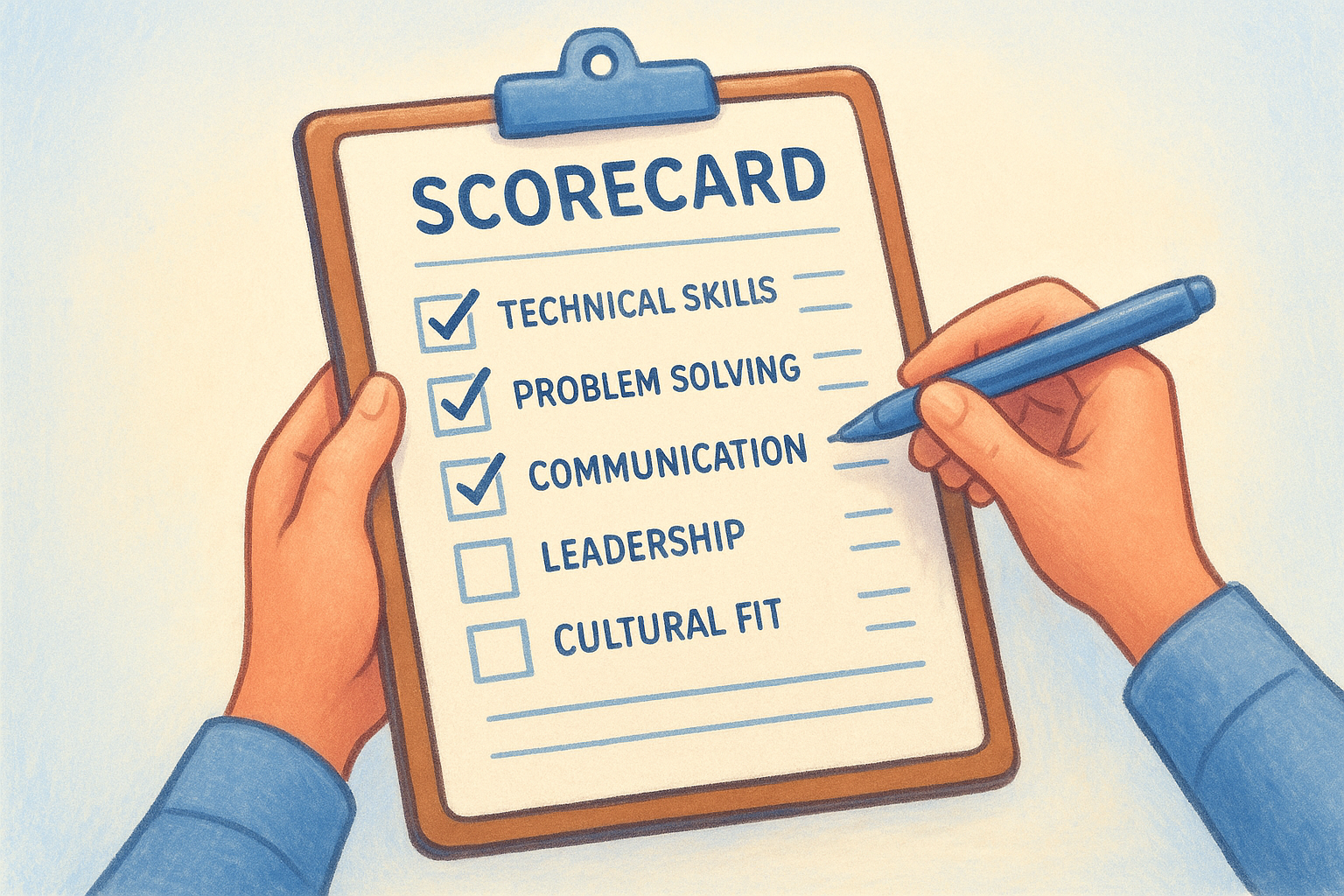
Create a scoring rubric before you open the role, not after you have already met a few candidates. Each criterion on the scorecard should map directly to a competency the job actually requires, such as technical problem-solving or communication. Limit your scorecard to five or six criteria to keep interviewers focused rather than overwhelmed.
How to train interviewers to show up prepared
Brief every interviewer before they join a panel. Share the candidate's resume, the scorecard, and the specific area they are responsible for evaluating so there is no overlap and no gaps in coverage. Preparation on your team's side directly reflects on how professional the candidate finds the entire process.
How to keep interviews on time and candidate-centered
Start and end every interview on schedule. Running over without asking signals that you do not respect the candidate's time. For panel interviews, assign a moderator who can redirect the conversation if it drifts off topic or runs long.
How to reduce bias across interview rounds
Use identical questions across all candidates for the same role and record individual scores before discussing as a group. Talking through candidates together before scoring is complete leads to groupthink and inconsistent results.
Structured interviews predict job performance significantly better than unstructured ones, which benefits your hiring outcomes and gives every candidate a fair shot at being evaluated honestly.
7. Keep momentum after the offer with preboarding
The offer acceptance is not the finish line. Many recruiters treat preboarding as an afterthought, but the period between acceptance and day one is where candidates quietly talk themselves out of joining or accept a competing offer. Treating this gap as a core part of your candidate experience best practices protects your pipeline investment and reduces no-shows before they happen.
How to prevent offer declines and no-shows
Candidates who go silent after accepting often do so because a competitor moved faster or the initial excitement faded during a long wait. Reach out within 48 hours of acceptance with a warm, personal message that confirms next steps and gives them something concrete to anticipate. Keep communication proactive throughout this period rather than waiting for the candidate to initiate contact.
Candidates who receive at least two meaningful touchpoints between offer acceptance and start date are far less likely to back out before day one.
What to communicate between acceptance and day one
Send a structured preboarding timeline that covers paperwork deadlines, system access setup, equipment delivery, and who their first-day contact will be. Clarity at this stage removes candidate anxiety and reinforces that joining your organization was the right call.
How to coordinate paperwork, equipment, and introductions
Assign a single owner for preboarding logistics so nothing falls through the cracks. Send equipment early, confirm software access before the start date, and introduce the new hire to their direct team via a short email before day one.
How to make onboarding part of the candidate experience
Share a first-week agenda before day one so your new hire arrives with context rather than confusion. Strong onboarding structure directly reinforces the positive impression your hiring process already built.
8. Measure candidate experience and improve each month
You cannot improve what you do not measure. Treating data collection as a standing part of your candidate experience best practices means building a monthly review habit into your recruiting calendar, not just pulling numbers when something obviously goes wrong.
Best practice 8: Track the signals that reveal friction
Start with the metrics that live inside your ATS. Time-to-respond, application drop-off rate, and stage-by-stage conversion each tell you where candidates are falling out of your process or losing confidence. If your drop-off spikes at the assessment stage, the task is probably too long or unclear. Watch your offer acceptance rate closely. If it dips below 80%, something in the experience or the offer itself needs immediate attention.
Tracking stage-by-stage conversion rates gives you a precise view of where your process loses candidates rather than a vague sense that something feels off.
Best practice 9: Ask candidates for feedback and act on it
Send a short survey of three to five questions within 48 hours of a final hiring decision, whether the candidate received an offer or not. Ask specifically about communication clarity, interview fairness, and how well the process reflected the actual role. Rejected candidates often give you the most honest responses because they have no reason to soften their answers.
How to turn feedback into process changes your team keeps
Review survey responses as a team once a month and identify the one or two patterns that come up most often. Assign a specific owner to each fix and attach a clear deadline. Small, consistent improvements made monthly compound into a hiring process that candidates actively recommend to others.
Next steps
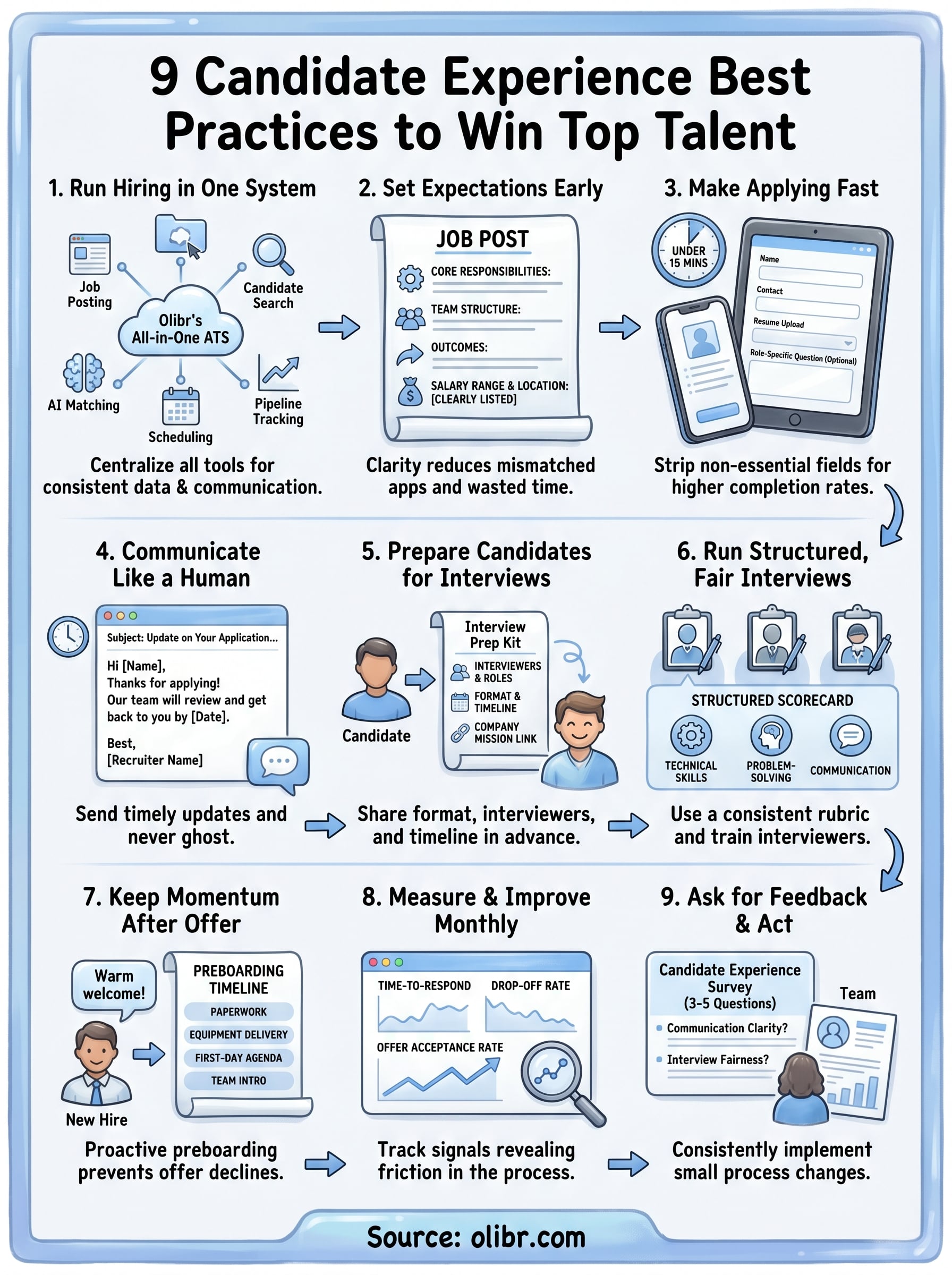
Every candidate experience best practice covered in this article works together. Clear job posts reduce mismatched applications. Fast forms keep strong candidates in your pipeline. Structured interviews protect fairness. Preboarding prevents no-shows. And consistent measurement turns your process from a guessing game into something you can improve month after month.
None of this requires a massive budget or a large team. What it requires is a single, reliable system where every recruiter works from the same information and every candidate gets a consistent, respectful experience from first contact to final decision. That is exactly what Olibr's free ATS and AI-powered hiring platform is built to deliver.
Start by auditing one stage of your current process where candidates lose momentum. Fix that stage first, measure the change, and then move to the next. Small, deliberate improvements made consistently are what separate companies that attract top talent from those that keep losing them.
For hiring teams
Search 180,000+ candidate profiles — free.
Olibr is a community-funded recruiting platform: full ATS, AI interviews, and a shared resume database. No per-seat fees.