Remote Hiring: How To Hire Remote Employees And Onboard Well
Hiring has changed. The office-only default is gone, and companies that limit their search to a single zip code are leaving strong candidates on the table. But knowing you want remote talent and knowing how to hire remote employees the right way are two very different things. Between compliance headaches, scattered communication, and the challenge of evaluating someone you've never met in person, remote hiring introduces real complexity that a standard recruiting playbook doesn't cover.
The good news: none of it is unsolvable. You just need a clear process, from writing the job post to running interviews to getting someone productive on day one. And the right tools make a measurable difference. Olibr's free recruiting platform gives hiring teams a searchable database of 180,000+ candidates, a free ATS and pay-as-you-go AI interviews and screening, so you can run a remote hiring process that's fast and structured without paying for expensive subscriptions.
This guide breaks down every step, sourcing, screening, interviewing, legal compliance, onboarding, so you can hire remote employees with confidence, whether they're across the state or across the world. Let's walk through what actually works.
What to decide before you hire remote
Before you post a single job listing, three foundational decisions will shape everything else in your remote hiring process. Getting them wrong early creates legal and operational problems that are expensive to fix later. Most hiring teams skip this step and end up building a remote team on a shaky foundation, so spend real time here before moving forward.
Decide where you can legally hire
Hiring remotely across state or national borders means your company becomes subject to the employment laws in the location where your employee actually works, not where your company is headquartered. In the US, each state has different rules around payroll taxes, workers' compensation, and benefits. Internationally, the complexity multiplies.
Before sourcing candidates, confirm which countries or states your legal and finance teams have approved for hiring, and whether you need a local entity or an Employer of Record (EOR) service to stay compliant.
For US-based hires in multiple states, you'll typically need to register as an employer in each state where a remote employee lives. For international hires, an EOR lets you employ workers abroad without setting up a foreign entity, which saves significant time and cost for smaller teams.
Choose between employee and contractor
This decision has legal, financial, and operational implications that you need to settle before sourcing. Contractors give you flexibility and lower overhead, but misclassifying an employee as a contractor exposes your company to back taxes, penalties, and lawsuits. The IRS provides guidance on worker classification that you should review if you're unsure.
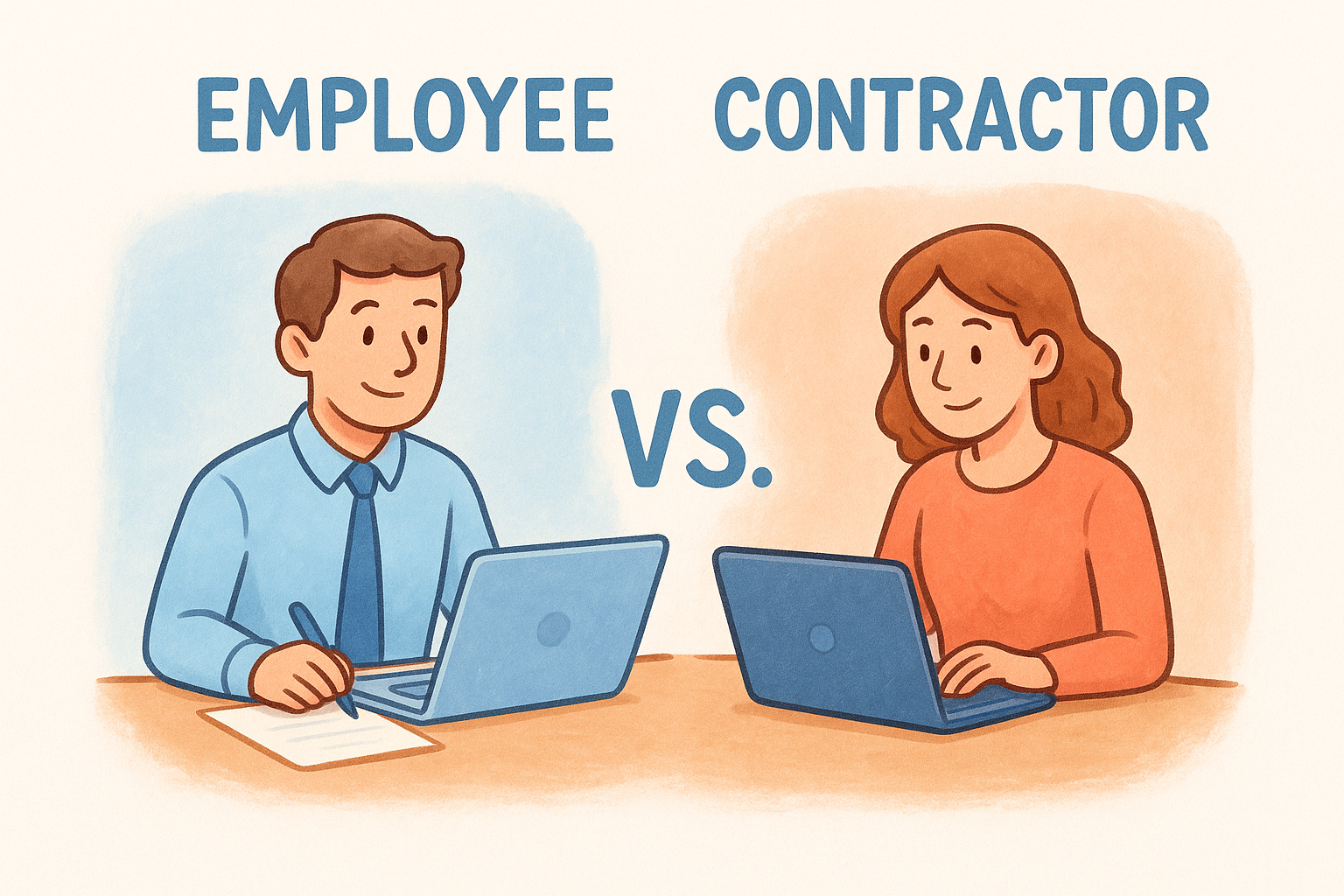
Here's a quick comparison to help you decide:
| Factor | Employee | Contractor |
|---|---|---|
| Control over schedule | High | Low |
| Benefits required | Yes | No |
| Tax withholding | Employer handles | Worker handles |
| Long-term commitment | Typical | Often project-based |
| IP ownership clarity | Usually clearer | Requires explicit contract |
Contractors work best for project-based or specialized work with clear deliverables. Full-time employees make more sense when you need someone embedded in your team, managing ongoing workflows, or holding institutional knowledge over time.
Set your working model before you write a single job post
Synchronous vs. asynchronous work is not just a preference, it's a filtering criterion. If your team operates in US Eastern time and you need someone available for daily standups, hiring in Southeast Asia creates a real coordination problem. Define this upfront so you can write it directly into the job description and screen for it early.
Knowing how to hire remote employees effectively means being specific about expectations from the start. Decide whether the role requires set hours, core overlap windows, or is fully flexible. Also confirm what equipment you'll provide versus what the employee is expected to supply, since this affects both your budget and the candidate's decision to apply. These decisions take less than an hour to make but save weeks of confusion during the hiring process.
Step 1. Define the role and source candidates
A vague job post attracts the wrong candidates and wastes your screening time. Remote roles need more specificity than on-site roles, not less, because the candidate has no office context to fill in the gaps. Before you post anything, write down the exact outputs you expect in the first 90 days and the tools the person will use daily.
Write a job description built for remote work
Your job post needs to do filtering work for you. Include the time zone requirement, any required overlap hours, and your communication tools (Slack, Zoom, etc.) directly in the description. This cuts down on unqualified applicants and signals to candidates that you've thought through how remote work actually functions. Here's a simple template you can adapt:
Role: [Job Title] (Remote, [Time Zone/Overlap Requirement])
Location: Open to candidates in [Country/State/Region]
Core hours: [e.g., 9am–1pm EST overlap required]
Tools: [Slack, Notion, GitHub, etc.]
90-day outcomes:
  - [Specific deliverable 1]
  - [Specific deliverable 2]
Requirements: [Skills, years of experience, domain]
Keep the language direct. Avoid listing 20 requirements when the role genuinely needs five. Long requirement lists discourage strong candidates who don't tick every box and inflate your inbound volume with people who apply regardless.
Source candidates where remote workers actually are
Sourcing strategy matters more in remote hiring because you're competing with every other employer who can hire the same person anywhere. Understanding how to hire remote employees means going beyond passive job board listings. Use a platform with a large, filterable candidate database so you can search by skill, experience level, and location rather than waiting on inbound applications alone.
A searchable database like Olibr's 180,000+ candidate pool lets you build a qualified shortlist in minutes by filtering on skills, domain, and career background.
Post on remote-specific boards and run proactive outbound searches at the same time. Reaching out directly to matched candidates gives you access to people who aren't actively job hunting but are open to the right opportunity, which cuts your time-to-hire significantly on competitive roles.
Step 2. Screen for remote fit and job skills
Screening for remote work is a two-part job. Job skills tell you if someone can do the work; remote fit tells you if they can do it without a manager standing nearby. Both matter, and collapsing them into a single unstructured phone call is where most hiring teams lose time. Build a structured screening process that separates these two dimensions from the start.
Screen for remote-specific traits first
Remote workers need to be self-directed, communicate proactively, and manage their own time without daily in-person check-ins. You can surface these traits with targeted questions during an initial async screen. Asking candidates to record a short video response or submit written answers forces them to demonstrate exactly the communication skills remote roles require.
When you understand how to hire remote employees well, you treat the screening format itself as a data point, not just the answers.
Use these questions to assess remote readiness:
- "Walk me through how you manage competing priorities without a manager checking in daily."
- "Describe how you flagged a project risk to a remote team in the past."
- "What does your home work setup look like, and how do you handle distractions?"
Weak answers often reveal dependency on in-person cues or reactive communication patterns that cause real coordination problems once someone joins a distributed team.
Evaluate job skills with a structured test
Once you confirm remote fit, assess technical or functional skills with a short, relevant work sample rather than relying on resume claims alone. Keep it focused: one task that mirrors actual day-to-day work, capped at 90 minutes. This respects the candidate's time and gives you something concrete to evaluate.
Here's a simple skill test brief template:
Task: [Short description of the task]
Context: [Background the candidate needs]
Deliverable: [What to submit, e.g., draft, analysis, code snippet]
Time limit: 60-90 minutes
Evaluation criteria: [Accuracy, clarity, approach, communication]
Score every candidate against the same criteria so your hiring decisions rest on evidence rather than gut feel.
Step 3. Run remote interviews and make the selection
Remote interviews differ from in-person interviews in one key way: you're evaluating communication and presence through a screen, which is exactly how the candidate will work with your team every single day. Treat the format itself as a signal. A candidate who shows up prepared, tests their tech in advance, and communicates clearly on video is already demonstrating remote competence before you've asked a single question.
Structure the interview as a two-stage process
A two-stage format keeps the process efficient and respects the candidate's time. Use the first round to confirm basic alignment on compensation, availability, and time zone fit before investing an hour in a deeper conversation. Reserve the second round for behavioral and situational questions that reveal how someone actually operates under pressure and ambiguity. Keep each round tightly scoped so neither session runs past its scheduled time.
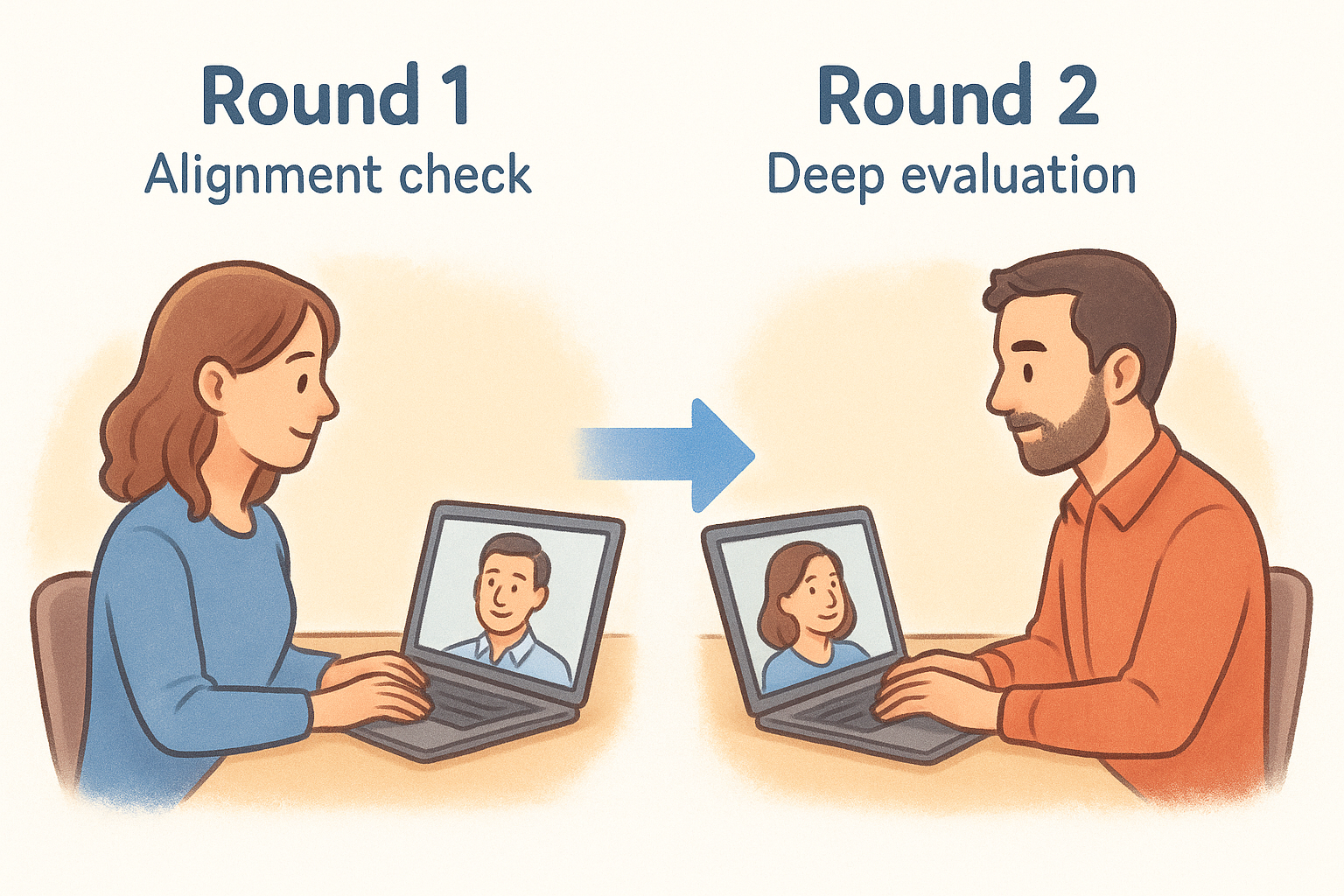
Round 1 (30 min): Alignment check
  - Availability and time zone overlap
  - Compensation expectations
  - Communication style and async tool comfort

Round 2 (60 min): Deep evaluation
  - Behavioral questions (STAR format)
  - Situational questions on remote challenges
  - Role-specific functional discussion
  - Time for candidate questions
When you understand how to hire remote employees well, you use the interview format itself to observe how candidates communicate, not just what they say.
Score candidates consistently and make your decision
Once both rounds are complete, score every candidate against the same rubric before you compare them to stop recency bias from skewing the outcome. A simple numeric scale across three dimensions keeps your final decision grounded in structured evidence rather than instinct.
Candidate: [Name]
Role: [Job Title]

Job skills (1-5): __
Remote readiness (1-5): __
Communication quality (1-5): __

Total: __ / 15
Key observations: [Notes]
Bring in at least one other team member to score independently before you discuss together, which reduces individual bias. Once all scores are recorded, compare totals and notes side by side to select your finalist and move straight to the offer.
Step 4. Offer, compliance, payroll, and onboarding
Getting to the offer stage is real progress, but this is where many remote hiring processes stall or break down. Legal compliance, payroll setup, and onboarding land all at once, and skipping any part of it creates problems that are much harder to fix after someone starts. Move through each element in order so nothing falls through the gaps.
Send a written offer that covers remote specifics
Your offer letter needs to go beyond salary and start date. Include the work location, required hours, and equipment terms directly in the offer document so there's no ambiguity once the candidate accepts. For international hires, confirm jurisdiction and governing law with your legal team before sending anything.
Offer Letter Essentials (Remote)
- Job title and reporting structure
- Compensation and currency
- Work location (remote, country/state)
- Required overlap hours or core schedule
- Equipment: company-provided or employee-supplied
- Start date
- Governing law and jurisdiction
Handle compliance and payroll before day one
Payroll setup depends entirely on where your new hire lives, not where your company operates. For US hires, register in their state and collect a completed W-4 before their start date. For international hires, an Employer of Record handles local registration and tax withholding on your behalf.
Getting compliance wrong is one of the most expensive mistakes in how to hire remote employees, so confirm every step with your legal or HR team before you process the first paycheck.
Onboard with a structured first-week plan
A remote hire's first week sets the tone for everything that follows. Without a physical office, new employees rely entirely on what you've prepared in advance. Send system access, documentation, and a day-by-day schedule before their start date so they arrive with context.
Remote Onboarding Checklist
Day 1: Account access, team intro call, read handbook
Day 2: Tool walkthroughs (Slack, PM tool, docs)
Day 3: Shadow a current team member
Day 4-5: First small task with feedback loop
Week 2: 1:1 with manager and goal-setting session
Structured onboarding shortens the time it takes a new remote hire to become productive, which is the whole point of building a rigorous hiring process in the first place.
Wrap-up and next steps
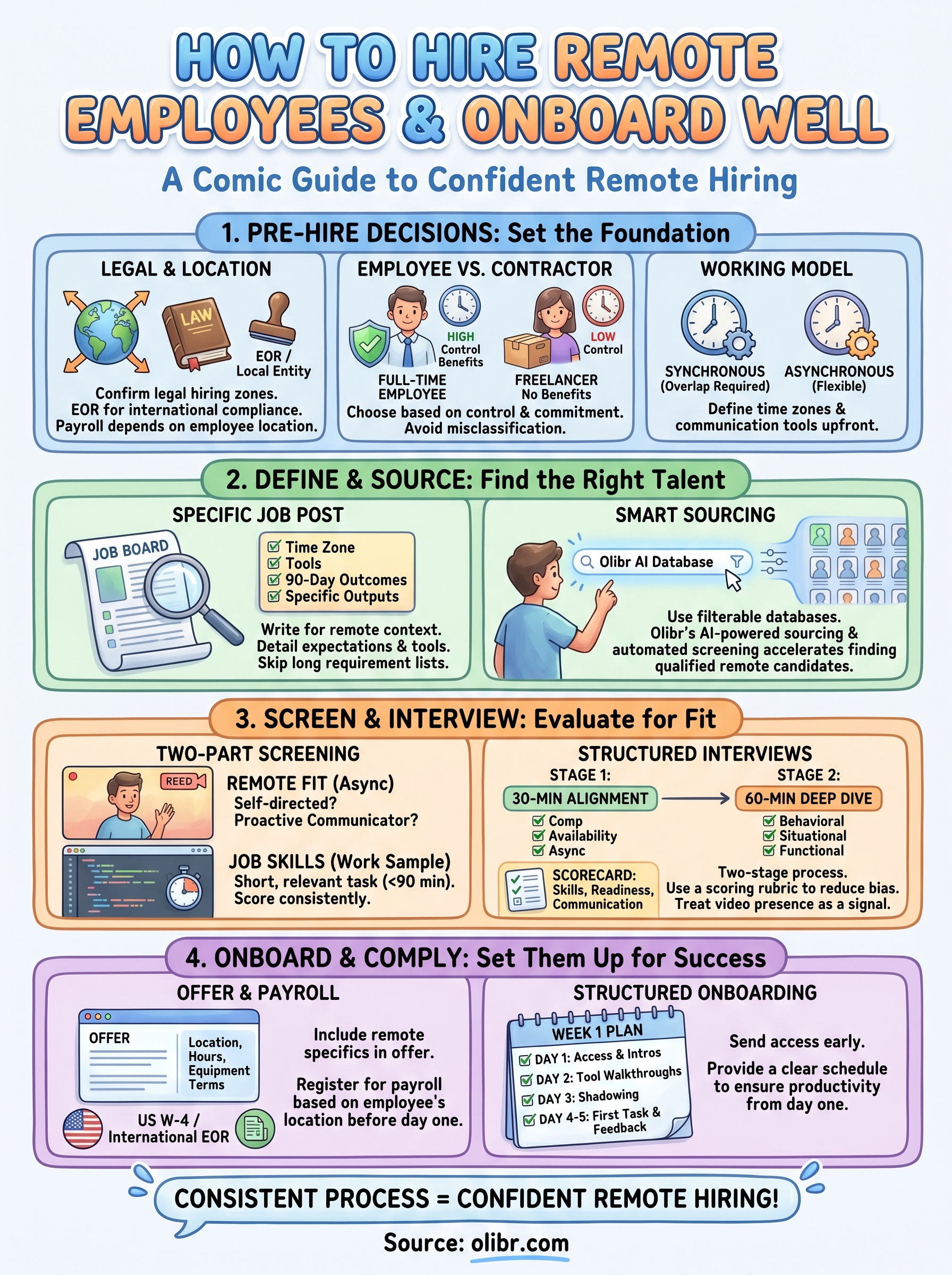
You now have a complete process for how to hire remote employees, from pre-hire legal decisions all the way through structured onboarding. The steps here work together: skipping the compliance check early creates payroll problems later, and skipping the structured interview means your onboarding is carrying the weight of gaps you should have caught in screening. Each step builds on the one before it, so follow the sequence rather than jumping to the parts that feel familiar.
The biggest lever you can pull right now is reducing the time you spend sourcing and screening manually. Most hiring teams lose weeks to tasks that tools handle in minutes. Olibr gives you a full ATS and a searchable candidate pool of 180,000+ profiles free in return for contributing profiles, plus AI interviews (10 free, then ₹99 each) and bulk resume parsing (50 CVs free, then ₹1 per CV). If you're ready to run a faster, more structured remote hiring process, start hiring on Olibr for free today.
For hiring teams
Search 180,000+ candidate profiles — free.
Olibr is a community-funded recruiting platform: full ATS, AI interviews, and a shared resume database. No per-seat fees.